ODM Fragrance Development: A Timeline for an E-commerce Brand
For an e-commerce brand, ODM is the fastest route from idea to sellable bottle, because the development work is front-loaded and the starting base is proven. The realistic calendar is still measured in months, and it arrives in five artefacts: the brief, the approved sample, the pilot batch, the bulk order and the product file. Each artefact is a decision point, and the brand that knows which decisions matter will compress the calendar more than any negotiation about price.
Key takeaways
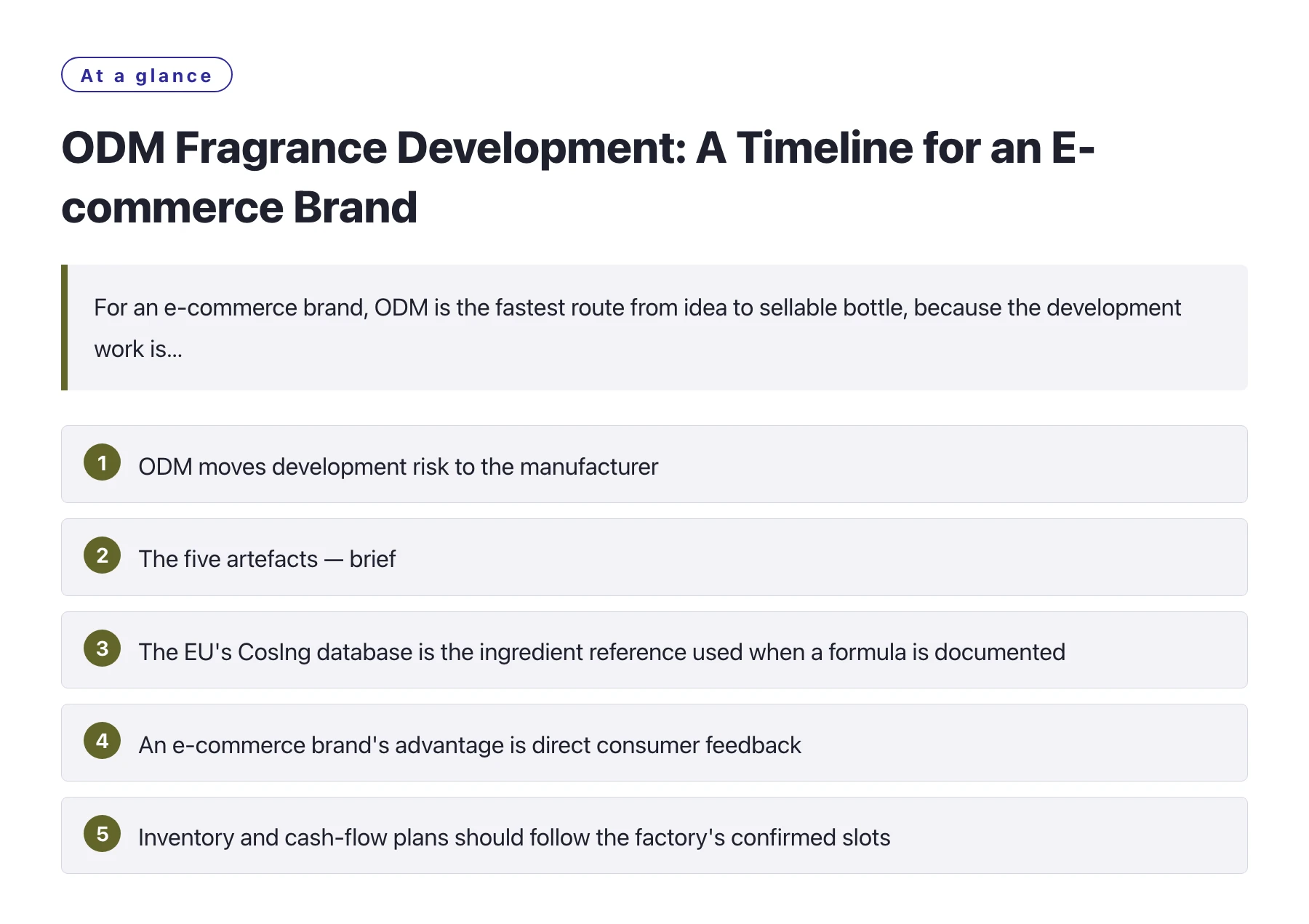
- ODM moves development risk to the manufacturer, which shortens the early calendar but means the starting point is shared unless exclusivity is negotiated.
- The five artefacts — brief, sample, pilot, bulk and file — are the milestones to plan around; everything else in the project is subordinate to them.
- The EU's CosIng database is the ingredient reference used when a formula is documented, so a development partner that works with it produces cleaner files downstream [2].
- An e-commerce brand's advantage is direct consumer feedback, so plan a feedback gate between sample and pilot rather than between pilot and bulk.
- Inventory and cash-flow plans should follow the factory's confirmed slots, not the marketing calendar.
E-commerce brands enter fragrance with a specific advantage: they know their customer, their price point and their messaging before the first bottle exists. The risk is not the product; it is the calendar. Fragrance does not stream, and a launch date that was set before the factory slots were confirmed will not survive contact with reality.
This article maps the ODM journey stage by stage, names the document you should hold at each stage, and flags the decisions that actually move the timeline.
Why ODM suits an e-commerce calendar
ODM means the manufacturer develops the concept from a brief, usually from an existing library of accords and pack formats. For a brand that brings distribution, brand and audience but not formulation, that removes the most uncertain part of the calendar.
Because the base is proven, the first sample arrives quickly, which matters for a brand that wants to test response before committing to bulk. The trade-off is that the starting point is not yours alone: if the scent becomes your identity, exclusivity has to be bought and written down.
That is the model a Xuelei ODM perfume manufacturer is built on: the same documentation chain runs from the first sample to the bulk release. It is worth asking any candidate how its sample records roll into bulk batch records, because that is where the model either works or frays.
The stage-by-stage calendar
- BriefScent direction, format, price band and deadline in writing. This stage takes days, but the quality of the brief determines the number of sampling rounds.
- First sampleUsually the first bottle in hand within a couple of weeks of the brief. Approve with a retained reference, not a photograph.
- Feedback gateThe one stage where an e-commerce brand beats a retail brand: show the sample to your own audience before you freeze it.
- Pilot batchA small production run that proves fill, decoration and batch records. Catch the problems here; the bulk run cannot absorb them.
- Bulk and fileProduction, then the ingredient documentation and the market file. The ship date follows the file, not the other way around.
The artefacts you should hold at each stage
| Stage | Artefact you hold | Why it matters |
|---|---|---|
| Brief | A signed direction sheet | Prevents "we discussed this" disputes |
| Sample | A retained physical reference | The standard the bulk run is measured against |
| Pilot | Batch records | Proves the process is repeatable |
| Bulk | Release certificate | Shows the batch met specification |
| File | Ingredient and compliance pack | Unlocks the destination market |
If any artefact is missing at the stage where it belongs, that gap is precisely where the timeline will stretch later.
The documents that follow the formula
Fragrance ingredients are documented against official references as well as the brand's own claims. In the EU the CosIng database is the public ingredient reference that sits behind cosmetic product files, which is why a formulator who works with it produces downstream documents faster [2].
A separate discipline is reading the quote itself, because where a perfume quote can hide costs is exactly where the budget will quietly grow where a perfume quote can hide costs.
Operating model matters too: ask in the first call whether compounding, filling and decoration happen under one roof. fragrance manufacturing under one roof is the difference between one calendar and three subcontractor calendars.
Market research firms such as Mintel publish consumer research on fragrance preferences and purchase behaviour, and e-commerce brands typically use those reports to position the scent story before production begins [1].
Plan the inventory around the confirmed factory slots, not the launch date. An e-commerce brand that treats the factory calendar as input to the marketing plan ships on schedule; one that treats it as an obstacle negotiates against itself.
Sources
- Mintel Press Centre —— Mintel's press releases on consumer and beauty market research, including fragrance and personal care trend reporting.
- EU CosIng — Cosmetic Ingredient Database (European Commission) —— The European Commission's CosIng database of cosmetic ingredients, listing ingredient functions, restrictions and labelling requirements under EU cosmetics law.
Frequently asked questions
How long does ODM fragrance development take for an e-commerce brand?
From brief to first sample is often a matter of weeks because bases are recycled; from sample to store-ready bulk is where the months sit, mostly in packaging, testing and documentation.
Do I own the ODM formula?
Not automatically. In ODM the starting point is the manufacturer's unless exclusivity is purchased and written into the contract. Decide before the first sample whether the scent is your brand asset or a shared base.
Should I test the sample with my audience before bulk?
Yes, and it is the one feedback loop retail brands cannot run cheaply. Show the scent, the bottle and the price to your own list before the formula freeze, then lock it.
What documents should arrive with the bulk order?
The ingredient list, the IFRA statement, batch release records and the market file for your destination. Ask for the list in writing at the pilot stage so the bulk run is not waiting on paper.
Can I start with ODM and develop my own formula later?
Yes, and many brands do. Keep the ownership clause in the original contract so the transition is a negotiation you planned, not one you lose.