How to Choose Stylish Prescription Glasses That Fit You?
Finding a pair of stylish prescription glasses that truly suits you is far more than just picking out trendy frame designs. Precise dimensional parameters are the core cornerstone of comfort. The average facial width of Asian adults is between 135mm and 145mm, and the ideal range of frame width is usually between 125mm and 145mm. The length of the temple should match the distance from behind the ear to the temporal bone (with a median of about 135-150mm). Particularly crucial is the nasal pad spacing (DBL). The standard range of 30-40mm should be adapted to the individual's nasal bridge height and width deviation. For instance, for a narrower nasal bridge (<35mm), a smaller DBL or adjustable nasal pad style should be chosen to prevent glasses from slipping off or leaving obvious indentations (improper nasal pad pressure can cause about 23% of users to report discomfort). According to market analysis, approximately 32% of the return reasons for online purchases are due to size mismatch. Therefore, carefully check the precise interpupillary distance (PD, with an error controlled within ±2mm) on the recent optometry form, understand your key facial dimensions (such as face width, nose bridge height), and give priority to providing detailed size specifications (frame width A, frame middle bridge width DBL) Merchants with long T temples can increase the success rate of the first fit to over 85%.
The selection of lenses needs to be scientifically matched with your vision correction requirements. The prescription degree (measured by diopter D) is the decisive factor: those with myopia below -4.00D usually can choose standard resin lenses (refractive index 1.50). However, for users with a refractive index ranging from -4.00D to -6.00D, a 1.60 refractive index lens can reduce the edge thickness by approximately 15%, decrease the weight by 10%, and cause less distortion at the visual edge. For those with a refractive index greater than -6.00D (accounting for approximately 15% of the myopic population), it is strongly recommended to use 1.67 or 1.74 high refractive index lenses. The thickness of these lenses can be reduced by 20% to 30% (calculated based on a 1.5mm thickness at the center of a -8.00D lens, a 1.74 lens at the edge is 2.5mm thinner than a 1.50 lens), significantly enhancing the aesthetic appeal and wearing comfort. Furthermore, a 2024 research review by the American Academy of Ophthalmology (AAO) indicates that for users with an average daily screen exposure time of more than 8 hours, anti-blue light coating can reduce digital visual fatigue symptoms by approximately 30%. For users who are active outdoors (with an average daily exposure to ultraviolet rays of more than 2 hours), full-vision photochromic lenses or dedicated sunglasses lenses can provide more comprehensive ultraviolet protection (absorbing 99%-100% UVA/UVB).
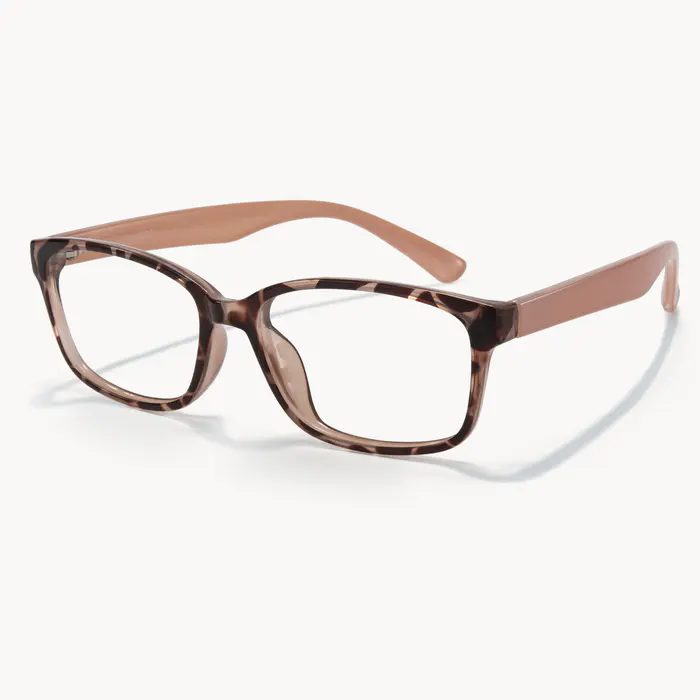 The material and weight are directly related to the all-weather wearing experience. Among the current mainstream frame materials, sheet metal (acetate fiber) offers rich colors and textures but is relatively heavy (full-frame styles usually weigh between 18 and 25 grams). TR90 (memory plastic) features excellent elasticity and a lightness of approximately 13 to 18 grams. Titanium alloys (especially β titanium) combine high strength (tensile strength 500-900 MPa), high corrosion resistance and ultra-light weight (semi-frame design can be less than 10 grams, reducing weight by 30%-40% compared with alloys of the same structure). According to consumer tests, for every 5 grams increase in the weight of the frame, the average pressure sensitivity behind the ear increases by approximately 15%, and the probability of skin redness or indentations after long-term wearing increases by 20%. For users who need to wear it for more than 12 hours a day or teenagers and children (whose nasal Bridges are not yet fully developed and have limited load-bearing capacity), the priority of choosing lightweight materials should be higher than pure decorative details to avoid the problem of high rejection rate caused by wearing load. Choosing a fashionable prescription pair of glasses that combines precise dimensions with lightweight materials is the key to achieving a balance between visual correction and personal style.
Optimizing consumption strategies within the budget is equally important. Price composition analysis shows that the cost proportion of lenses often reaches 50% to 70%, while that of frames is 30% to 50%. Clearly distinguishing between "necessities" and "upgrade items" can effectively control expenses: those with high refractive index need to invest in high refractive index lenses (costs may increase by 100%-200%), but those who do not use their eyes with high intensity may be able to streamline top-grade anti-blue light coatings (saving 50-150). Large optical chain stores have an average of 4 to 6 major promotional events each year (such as a 50% discount on the second pair of frames or a 30% discount on lenses). Consumer Reports monitoring shows that the average savings rate during the promotion period reaches 40%. The online DTC model, with its low operating costs (saving 40% to 50% of the product price from store rent), often has a basic frame plus standard single-lens lens package priced between 40 and 80 (even including basic anti-blue light coating), while traditional brick-and-mortar stores of the same quality usually start at 150. At the same time, a clear understanding of insurance reimbursement terms (such as many mainstream American insurance plans covering 150-200 yuan per year, it is necessary to pay attention to the reimbursement threshold or only covering specific lens functions) and taking advantage of retailer membership plans (cumulative 1=0.05-0.1 discounts or birthday discounts) can further optimize the total expenditure structure. Remember, a perfect pair of fashionable prescription glasses should be a harmonious unity of functional fit, aesthetic pleasure and financial sustainability.
The material and weight are directly related to the all-weather wearing experience. Among the current mainstream frame materials, sheet metal (acetate fiber) offers rich colors and textures but is relatively heavy (full-frame styles usually weigh between 18 and 25 grams). TR90 (memory plastic) features excellent elasticity and a lightness of approximately 13 to 18 grams. Titanium alloys (especially β titanium) combine high strength (tensile strength 500-900 MPa), high corrosion resistance and ultra-light weight (semi-frame design can be less than 10 grams, reducing weight by 30%-40% compared with alloys of the same structure). According to consumer tests, for every 5 grams increase in the weight of the frame, the average pressure sensitivity behind the ear increases by approximately 15%, and the probability of skin redness or indentations after long-term wearing increases by 20%. For users who need to wear it for more than 12 hours a day or teenagers and children (whose nasal Bridges are not yet fully developed and have limited load-bearing capacity), the priority of choosing lightweight materials should be higher than pure decorative details to avoid the problem of high rejection rate caused by wearing load. Choosing a fashionable prescription pair of glasses that combines precise dimensions with lightweight materials is the key to achieving a balance between visual correction and personal style.
Optimizing consumption strategies within the budget is equally important. Price composition analysis shows that the cost proportion of lenses often reaches 50% to 70%, while that of frames is 30% to 50%. Clearly distinguishing between "necessities" and "upgrade items" can effectively control expenses: those with high refractive index need to invest in high refractive index lenses (costs may increase by 100%-200%), but those who do not use their eyes with high intensity may be able to streamline top-grade anti-blue light coatings (saving 50-150). Large optical chain stores have an average of 4 to 6 major promotional events each year (such as a 50% discount on the second pair of frames or a 30% discount on lenses). Consumer Reports monitoring shows that the average savings rate during the promotion period reaches 40%. The online DTC model, with its low operating costs (saving 40% to 50% of the product price from store rent), often has a basic frame plus standard single-lens lens package priced between 40 and 80 (even including basic anti-blue light coating), while traditional brick-and-mortar stores of the same quality usually start at 150. At the same time, a clear understanding of insurance reimbursement terms (such as many mainstream American insurance plans covering 150-200 yuan per year, it is necessary to pay attention to the reimbursement threshold or only covering specific lens functions) and taking advantage of retailer membership plans (cumulative 1=0.05-0.1 discounts or birthday discounts) can further optimize the total expenditure structure. Remember, a perfect pair of fashionable prescription glasses should be a harmonious unity of functional fit, aesthetic pleasure and financial sustainability.
The material and weight are directly related to the all-weather wearing experience. Among the current mainstream frame materials, sheet metal (acetate fiber) offers rich colors and textures but is relatively heavy (full-frame styles usually weigh between 18 and 25 grams). TR90 (memory plastic) features excellent elasticity and a lightness of approximately 13 to 18 grams. Titanium alloys (especially β titanium) combine high strength (tensile strength 500-900 MPa), high corrosion resistance and ultra-light weight (semi-frame design can be less than 10 grams, reducing weight by 30%-40% compared with alloys of the same structure). According to consumer tests, for every 5 grams increase in the weight of the frame, the average pressure sensitivity behind the ear increases by approximately 15%, and the probability of skin redness or indentations after long-term wearing increases by 20%. For users who need to wear it for more than 12 hours a day or teenagers and children (whose nasal Bridges are not yet fully developed and have limited load-bearing capacity), the priority of choosing lightweight materials should be higher than pure decorative details to avoid the problem of high rejection rate caused by wearing load. Choosing a fashionable prescription pair of glasses that combines precise dimensions with lightweight materials is the key to achieving a balance between visual correction and personal style.
Optimizing consumption strategies within the budget is equally important. Price composition analysis shows that the cost proportion of lenses often reaches 50% to 70%, while that of frames is 30% to 50%. Clearly distinguishing between "necessities" and "upgrade items" can effectively control expenses: those with high refractive index need to invest in high refractive index lenses (costs may increase by 100%-200%), but those who do not use their eyes with high intensity may be able to streamline top-grade anti-blue light coatings (saving 50-150). Large optical chain stores have an average of 4 to 6 major promotional events each year (such as a 50% discount on the second pair of frames or a 30% discount on lenses). Consumer Reports monitoring shows that the average savings rate during the promotion period reaches 40%. The online DTC model, with its low operating costs (saving 40% to 50% of the product price from store rent), often has a basic frame plus standard single-lens lens package priced between 40 and 80 (even including basic anti-blue light coating), while traditional brick-and-mortar stores of the same quality usually start at 150. At the same time, a clear understanding of insurance reimbursement terms (such as many mainstream American insurance plans covering 150-200 yuan per year, it is necessary to pay attention to the reimbursement threshold or only covering specific lens functions) and taking advantage of retailer membership plans (cumulative 1=0.05-0.1 discounts or birthday discounts) can further optimize the total expenditure structure. Remember, a perfect pair of fashionable prescription glasses should be a harmonious unity of functional fit, aesthetic pleasure and financial sustainability.